
Looking for army surplus sleeping bags that perform in cold or variable climates? This guide highlights five arctic-ready options that balance insulation, bulk, and price. Each pick is suitable for different buyers—from tactical enthusiasts and outdoor travelers to DIY campers and survival prep hobbyists. The table below compares core details to help you choose quickly.
| Product | Best For | Key Feature | Temperature Range (general) |
|---|---|---|---|
| US Military Modular System Green Patrol Sleeping Bag | Budget-conscious preppers | Long 92″ length, sturdy build | Above freezing to cold |
| MT Army Military Modular Sleeping Bags System, Multi Layered with Bivy Cover | All-season hikers | Multi-layer design with bivy, weatherproof | 5-15°C comfort; down to -40°C with system |
| MT Modular Sleep System – 4-Piece | Tactical/Outdoor professionals | Front-zip, vacuum compression sack | Layered comfort for extreme conditions |
| MT Army Military Modular Sleeping Bags System, Multi Layered with Bivy Cover (OCP) | US Army camo enthusiasts | OCP color option with bivy | Warmth with modular layering |
| Arctic Lemmings Envelope Sleeping Bag | Indoor/outdoor travel and light expeditions | Three-season warmth, compact | Three-season warmth |
US Military Modular System Green Patrol Sleeping Bag
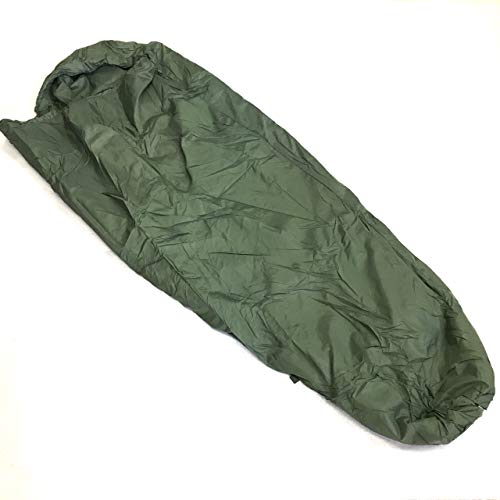
Best for budget-focused buyers who want a long, durable patrol bag with military framing. This model offers a 92″ length and 37″ width at its widest, narrowing to 24″—suitable for taller users who value a roomy fit in cold weather. The design supports layering and basic ground insulation, making it a straightforward option for all-season use when paired with a liner. Caution: the outer fabric and seams may require careful inspection for wear in rugged environments.
MT Army Military Modular Sleeping Bags System, Multi Layered with Bivy Cover

A strong pick for all-season use where modular layering matters. This MT system combines a bivy cover with multiple layers and a rugged outer shell, using high-grade filling for warmth and loft. The kit emphasizes waterproof, wind-resistant construction and heat-sealed seams, with a wide-to-narrow size range that adapts to different body types. Best for: users who expect wet or windy conditions and want reliable insulation in a compact footprint. Caution: the extensive feature list can be overwhelming; focus on the core layers you actually need to avoid overpacking.
MT Modular Sleep System – 4-Piece Set
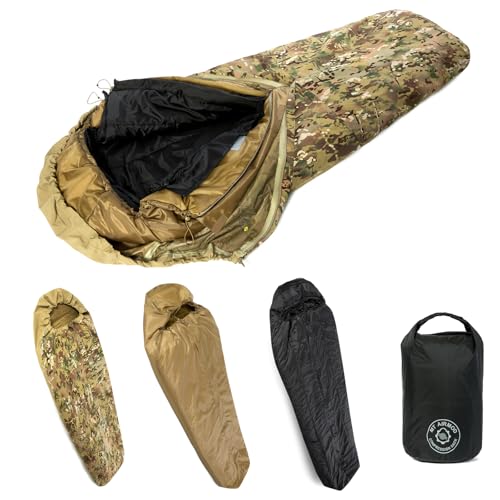
Choose this when you want a complete, military-spec sleep system in one package. Includes a Patrol Bag, Intermediate Cold Weather Bag, a waterproof bivy cover, and a vacuum compression sack. The redesigned front-zip design improves ventilation and quick entry, which is practical in tactical or emergency scenarios. Best for: professionals and serious campers who value quick access and space-saving storage. Limitation: front-zip design may alter fit for certain sleeping positions compared to traditional side-entry bags.
MT Army Military Modular Sleeping Bags System, Multi Layered with Bivy Cover (OCP)

This MT option blends the modular concept with OCP coloration for those who want a camouflage-aligned setup while staying weather-ready. Like the broader MT family, it uses a bivy cover and multiple layers designed to maximize warmth and moisture resistance. Best for: field use or camping where a discretely colored system and robust layers matter. Caution: read the size notes closely to ensure you get the correct width and length for your height and preferred layering style.
Arctic Lemmings Envelope Sleeping Bag

Best for three-season use and travel-friendly comfort. This envelope-style bag emphasizes warmth, safety, and ease of transport. Its soft, 40d taffeta fabric can provide a comfortable sleeping experience in spring, autumn, or mild winter trips. Best for: travelers and casual campers who prioritize a contained, warm footprint and easy packing. Limitation: not designed for extreme winter conditions; pair with a liner if temperatures drop below expected ranges.
Buying Guide: Key Considerations For Army Surplus Sleeping Bags
- Insulation and temperature range: Look for layering options, fill material quality, and the stated comfort and extreme temperatures. The right system varies from 5-15°C comfort to sub-zero ranges depending on layering and bivy usage.
- System design: Decide between 2-piece (base bag with bivy) or 4-piece modular systems. Front-zip designs often enable faster entry and better ventilation during warm spells or emergencies.
- Size and fit: Length and width must accommodate your height and torso size. A too-snug bag can reduce warmth, while a bag that is too large may waste space and warmth.
- Moisture management: Waterproof or water-resistant shells, seam sealing, and breathable fabrics all influence performance in damp conditions. Consider bivies and liners for added moisture protection.
- Weight and compressibility: Vacuum compression sacks reduce volume significantly but add weight. Weigh the trade-off against storage efficiency based on transport needs.
- Color and camouflage: If field use or photography contexts require low visibility, select appropriate color options such as OCP or army camo.
- Durability and maintenance: Inspect zippers, seams, and fabric durability. Some models use heavy-duty YKK zippers and reinforced seams; others prioritize lighter weight.
Frequently Asked Questions
- What is a modular sleep system in army surplus sleeping bags? A modular sleep system combines multiple bags and a bivy cover that can be used together or separately to tailor warmth and protection to conditions.
- Which sleeping bag is best for extreme cold? Look for multi-layer designs with high-grade filling and a bivy cover for additional moisture protection; consider a system that supports layering down to -40°C or lower in combination with other pieces.
- Is a bivy cover necessary? A bivy adds weather resistance and moisture protection, extending the bag’s usable range in damp or windy environments.
- Should I choose a front-zip or side-entry design? Front-zip designs provide easier entry and exit, faster ventilation, and improved emergency egress in tactical scenarios. Side-entry bags may offer different sleeping positions but can be slower to access.
- How important is the fabric and seam construction? Durable fabrics and heat-treated seams help resist moisture and wear. Look for seam sealing and reinforced stitching on high-stress areas.
- Can an oversized bag be comfortable? An appropriately sized bag allows freedom of movement, reduces drafts, and improves warmth when paired with a liner. Avoid bags that are excessively loose, as they lose insulating efficiency.