
If you’re searching for reliable camping gas stoves, you want options that are easy to light, fuel-efficient, and safe in outdoor conditions. This guide highlights five practical stoves and fuel accessories that perform well across camping, backpacking, and emergency scenarios. Each choice targets different needs—compact portability, dual-fuel flexibility, cold-weather performance, or higher heat for quick meals. The selections below help you pick the best match for your cooking style, weather, and travel plans.
| Product | Fuel Type | Best For | Why It Stands Out |
|---|---|---|---|
| Gas One Portable Butane Camping Stove with Case | Butane | Lightweight solo trips | High output and automatic ignition with safety shut-off |
| Gas One GS-3400P Dual Fuel Stove | Butane or Propane | Versatile emergencies and varied fuel access | Dual-fuel flexibility with a practical ignition system |
| KOMAN Isobutane Fuel Canister 230 Gram (4 Pack) | Isobutane (butane/propane blend) | All-season use and compact trips | Lightweight, reliable performance in cold weather |
| BIG HORN OUTDOORS 2 Burner Propane Camping Stove | Propane | Group meals and hot dishes | High power with wind resistance and safety features |
| AOTU Fuel Can Stabilizer | Various gas cans | Stability for upright canisters | Foldable design and stable support for uneven surfaces |
Note: The five products above cover a range of needs—from compact solo travel to family camping and emergency kits. The selected items emphasize safety features, ease of ignition, and fuel availability, helping you choose with confidence.
Gas One Portable Butane Stove With Case

Best for: solo campers or emergency kits needing a compact, lightweight stove. Features include high output (7,650 BTU) for rapid boiling, automatic ignition, and a safety shut-off that ejects the canister if forced. This is ideal when you want reliable heat without fumbling for lighters. Caution: uses 8 oz butane canisters sold separately; fuel accessibility may vary by location.
Gas One GS-3400P Dual Fuel Stove
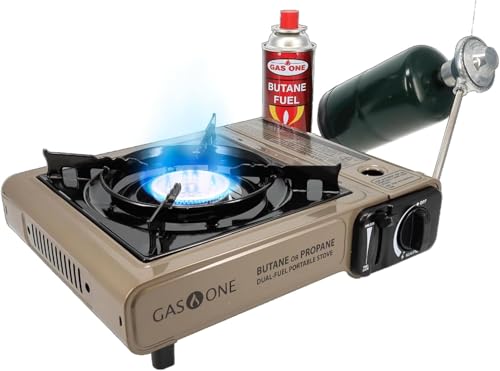
Best for: campers who may encounter varying fuel availability or want backup options. This dual-fuel stove accepts both butane and propane, with an automatic piezo ignition and a regulation for adjustable heat. Its portability and ease of use make it suitable for emergencies or quick meals. Limitation: fuel type must be compatible with canisters you carry and may require adapters for certain setups.
KOMAN Isobutane Fuel Canister 230 Gram

Best for: extended trips and cold-weather adventures where consistent output matters. This 230 g canister blends butane and propane for higher vapor pressure, improving performance as fuel level drops. Compact size makes it easy to carry in a backpack. Caution: suitability depends on stove compatibility and weather conditions; store upright and away from heat.
BIG HORN OUTDOORS 2 Burner Propane Camping Stove

Best for: groups or families. This two-burner stove delivers up to 17,000 BTU, with a wind-stable design and a piezo ignition for quick lighting. It is compatible with propane and includes safety features like anti-slip feet and flame-retardant hose fittings. Consideration: uses more fuel and is bulkier than single-burner options, affecting portability.
AOTU Fuel Can Stabilizer

Best for: campers needing stable canister positioning on uneven ground. This foldable stand supports most gas tanks and reduces tipping. It’s lightweight, easy to store, and includes rubber pads to improve grip. Limitation: stabilizer alone doesn’t heat food—use with a compatible stove.
Buying Guide: Key Considerations For Choosing A Camping Gas Stove
- Fuel compatibility: Choose a stove that matches the fuel you can readily obtain (butane, propane, isobutane blends, or dual-fuel options).
- Portability vs. power: Solo trips benefit from compact models with high BTU output; group trips may need two burners or larger propane stoves.
- Weather performance: Cold weather and wind can affect flame stability; consider windshields and fuel blends designed for cold use.
- Ignition and safety: Look for automatic or piezo ignition and built-in safety shut-offs to prevent accidents in wind or rough terrain.
- Storage and accessories: A protective case, carry bag, and stabilizers add value for transport and stability on uneven ground.
- Fuel availability and storage: Plan fuel purchases ahead of trips and store fuel canisters safely away from heat and direct sunlight.
Frequently Asked Questions
- What is the best fuel for camping in cold weather? Isobutane blends provide better performance in cold weather when used with the right stove designed for such fuel.
- Are dual-fuel stoves worth it? Yes, if you anticipate limited fuel access; they offer flexibility between butane, propane, or other gas canisters.
- How do I light a camping stove safely? Rely on built-in ignition when available, keep flames away from clothing, and use a stable surface to prevent tipping.
- Can I use a stove indoors? No, most camping stoves are designed for outdoor use only due to carbon monoxide and ventilation concerns.
- Do I need a windscreen? A windscreen helps maintain flame efficiency and even heat, especially on breezy campsites.
- What should I consider when packing fuel canisters? Check stove compatibility, pack spare canisters securely, and follow local regulations for transport if traveling by air.