
Facing a sudden disaster or a roadside, travel, or outdoor emergency calls for a compact, ready-to-grab kit. This guide highlights five top emergency to-go bags that balance immediate practicality with reliable gear. Each option suits different buyers—from solo hikers to families who need multi-person kits. Read on to compare core offerings, what they include, and who should choose which kit for peace of mind on the go.
| Product | Best For | Key Benefit |
|---|---|---|
| Ready America 70280 72 Hour Emergency Kit (2-Person) | Couples, Car Kits | Compact dual-person preparedness with first aid essentials |
| Pixato Survival Kit 258 PCS | Families, Outdoor Adventurers | Large tool set with water filtration and heavy-duty backpack |
| Ready America 72 Hour Deluxe Emergency Kit (2-Person) | Vehicles, Boats | Comprehensive Red Cross–aligned supplies with hydration and food |
| Redfora Complete Earthquake Bag (1 Person) | Single users in earthquake zones | Color-coded, all-in-one for quick grab-and-go |
| EVERLIT 72 Hours 3 Day Earthquake Kit | Families, Preparedness fans | Extensive medical and water/food supplies in a tactical pack |
Ready America 70280 72 Hour Emergency Kit, 2-Person

This kit is designed for two people for 72 hours, aligning with Red Cross guidelines. It includes a 33-piece first aid kit, emergency food bars and water pouches with a five-year shelf life, survival blankets, masks, nitrile gloves, a whistle, ponchos, and basic hygiene items. Best for a car or small boat kit where two people share compact essentials. A noted limitation is that it’s optimized for two people; larger households should consider higher-capacity options.
Pixato Survival Kit 258 PCS
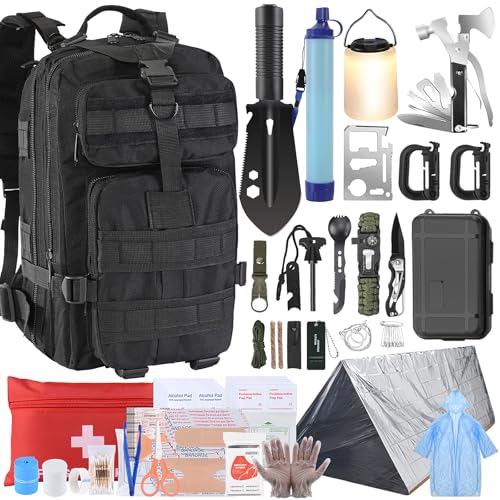
This professional-grade 258-piece kit covers a broad range of wilderness and disaster needs. It includes a 25L tactical backpack, a water filter, emergency tent, a 14-in-1 tool, a flashlight, a compass, a drinking system, and a spork. It’s ideal for families or groups who need rapid access to diverse gear. Best for: multi-activity outdoor trips or long-duration incidents where you want a comprehensive toolset in one bag. Limitation: bulkier setup may be heavy for frequent backpacking use.
Ready America 72 Hour Deluxe Emergency Kit (2-Person)

Designed for two people, this deluxe kit adds a power station with extended food and water provisions alongside standard essentials. It provides 2 x 2400-calorie survival food bars and six water pouches with five-year shelf life. Best for vehicle or boat kits where dependable energy and hydration are priorities. Choose this if you want more robust food and a powered option in a go-bag. Caution: heavier pack weight may be less suitable for brief, minimalist trips.
Redfora Complete Earthquake Bag (1 Person)

Redfora’s kit offers a color-coded organization system and watery, food, and hygiene components tailored to one person for three days. It includes 3600-calorie food bars, water pouches, purification tablets, and a full hygiene kit, plus tools like a NOAA hand crank device. Best for individuals in earthquake-prone areas who want quick access to all-in-one packaging. Limitation: dedicated for a single person; families need larger capacity.
EVERLIT 72 Hours 3 Day Kit

The EVERLIT STORM II kit targets families with extensive medical supplies, significant water and food provisions, and a heavy-duty tactical backpack. It includes 24 packs of emergency drinking water, a five-year shelf-life 3600-calorie food bar, a CAT tourniquet, and a broad medical lineup. Best for households seeking a thorough, all-hazards preparedness option. A potential drawback is the heavier weight, which can impact portability for shorter trips.
Ready America 72 Hour Emergency Kit (4-Person)

This four-person kit scaling up the essentials to support a small family for 3 days. It includes an expanded 107-piece first aid kit, multiple food bars, water pouches, survival blankets, and ponchos. Best for families who need shared supplies with straightforward access. Limitation: higher weight and larger footprint compared to two-person kits.
Blue Seventy-Two Pro Series 72 Hour Backpack

The Blue Seventy-Two kit comes with a larger tactical backpack, a 2,400-calorie food pack, water pouches, a first aid kit, and a whistle/compass combo. Best for users seeking a polished, ready-to-go backpack with a curated selection of gear for both urban and natural-disaster scenarios. It’s a good balance of portability and gear density. Limitation: premium kit may carry higher upfront cost.
HIHEGD Survival Kit 250Pcs

This 250-piece kit includes a MOLLE-compatible bag, a first aid kit with emergency tools, an EMT bag upgrade, and a basic tent option. Best for portability plus expandability in an all-purpose emergency bag for hikers, campers, or car travelers. One limitation is that some tools are basic and may require user familiarity to maximize utility in a high-stress situation.
Buying Guide: Key Considerations For Selecting An Emergency To-Go Bag
- Purpose and setting: Choose a kit that aligns with your most likely scenario—car, home, or outdoor use. For vehicles, prioritize water, food, and a compact first aid kit that’s easy to grab while seated.
- Capacity and portability: Decide between 1-person, 2-person, or family-sized bags. Note weight, bag durability, and ease of access when minutes matter.
- Food and water: Look for calorie-dense, shelf-stable food and water with long shelf life. Confirm the number of hydration options and how long they last in storage.
- Medical supplies: A robust first aid kit is essential. Consider whether you need tourniquets, wound care, and basic meds included or if you’ll supplement later.
- Durability and weather readiness: Waterproof or water-resistant bags, rugged zippers, and insulation matter if you’ll store kits in a vehicle or expose them to the elements.
- Expandability: MOLLE compatibility or extra pockets help you add gear over time without buying a new bag.
- Pricing and weight balance: Heavier kits deliver more gear, but weigh users down during urgent evacuations. Balance cost, weight, and needs.
Frequently Asked Questions
- What should be in a basic emergency to-go bag?
A compact bag should include water, non-perishable food, a first aid kit, a flashlight, a whistle, a poncho or blanket, and a portable power source or batteries. Add personal items like medications as needed.
- How long should an emergency go-bag last for two people?
Most two-person kits are designed to cover 72 hours (three days). For longer outages, consider upgrading to a larger backpack with more food, water, and medical supplies.
- Is a water filter included in most kits?
Some kits include a water filter or purification tablets. If not, plan to add a portable filter or purification tablets for safe drinking water in the wild.
- Should I buy a single-person or multi-person kit?
Choose based on your household size and typical usage. Singles need compact one-person packs; families benefit from two- to four-person kits to avoid sharing gear during emergencies.
- What qualifies as “ready-to-grab” in a go-bag?
Gear should be accessible in a single reach, organized for quick retrieval, and stored in a waterproof or rugged bag with clearly labeled compartments.
- How often should I replace food and water in a kit?
Inspect shelf-stable items annually and replace food and water pouches at least every five years or per manufacturer guidance.