
Answer: For off-grid RV setups, these five 12V or solar-ready rooftop and portable AC units provide reliable cooling, quiet operation, and low power draw to suit independent campers, van life travelers, and remote hikers. The top picks below are best for different off-grid needs—from ultra-quiet nights to heater-ready climates. A quick buying table sums up key specs to compare at a glance.
| Product | Cooling BTU | Heating BTU | Power | Best For |
|---|---|---|---|---|
| 12V RV Air Conditioner with Heat – 11k BTU | 11,000 | 3,500 | 12V battery powered | All-season off-grid travelers needing heating |
| 12V RV Air Conditioner – 11k BTU (Cool Only) | 11,000 | 0 | 12V battery powered | Quiet cooling for small spaces |
| 12V RV Air Conditioner – 11k BTU with Heating | 11,000 | 4,500 | 12V battery powered | Versatile climate control off-grid |
| Xenjum 12V RV Air Conditioner (w heater) | 11,000 | 4,500 | 12V battery powered | Energy-efficient heating and cooling |
| Portable Tent AC – 5,100 BTU / 4-in-1 | 5,100 | 0 | AC powered (not standard vehicle socket) | Tent, small camper, or off-grid tents |
Below are five select models that cover a range of off-grid needs—from ultra-quiet nighttime cooling to heating capability and portable outdoor use. Each entry notes who benefits most and why it was chosen, along with a practical caveat to consider.
12V RV Air Conditioner with Heat 11k BTU – iRooVee

Best for dual-season comfort in off-grid setups. This unit provides 11,000 BTU cooling plus 3,500 BTU heating with a high-efficiency compressor. It is designed for rapid cooling and heating within minutes, making it suitable for cross-country trips where temperatures swing from desert heat to mountain cold. The system emphasizes ultra-quiet operation at 45dB, aided by an upgraded silent compressor and aerodynamic fan blades, ideal for light sleepers and quiet campsites. It runs on vehicle battery power for up to about 8–12 hours depending on battery size.
Caveat: Battery-dependent performance means total runtime depends on available capacity and solar input if used off-grid. Complex roof mounting may require professional installation.
Best for: RVers who need heating as well as cooling without a generator, especially in mixed climates.
12V RV Air Conditioner 11k BTU Ultra-Low Power Draw – Somokg (Cool Only)
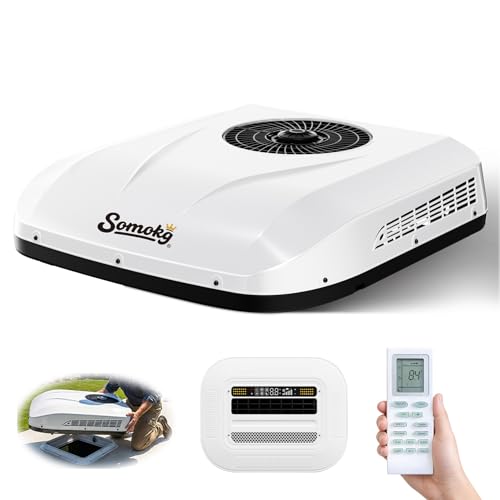
Best for compact, silent cooling without heating needs. This 11,000 BTU unit delivers rapid cooling within minutes, powered by a high-frequency compressor for quick comfort. It features soft-start to reduce startup surges and improve battery endurance, with 360° vents for even airflow. Return users can enjoy up to 12 hours of cooling on Eco Mode with a 400Ah battery, making it a strong pick for long nights off-grid. It remains quiet at around 35dB, which is favorable for peaceful outdoor life.
Caveat: This model is for cooling only; you’ll need a separate heating solution for cold nights.
Best for: Campers who prioritize quiet, efficient cooling and have adequate storage for a larger battery bank.
12V RV Air Conditioner 11k BTU with Heating – Somokg

Best for versatile climate control in off-grid camping. This Somokg unit combines 11,000 BTU cooling with 4,500 BTU supplemental heating, offering convenient all-season comfort. Its soft-start feature reduces power surges, supporting battery and solar systems, with 12 hours of cooling on a 400Ah battery. The 360° vents provide balanced airflow and mild sound levels, suitable for peaceful surroundings.
Caveat: As with other 12V units, runtime hinges on battery capacity and auxiliary power. Ensure your battery bank and wiring can handle occasional startup surges.
Best for: RVers seeking a single unit for both cooling and heating in off-grid settings.
Xenjum 12V RV Air Conditioner with Heater – 11k BTU
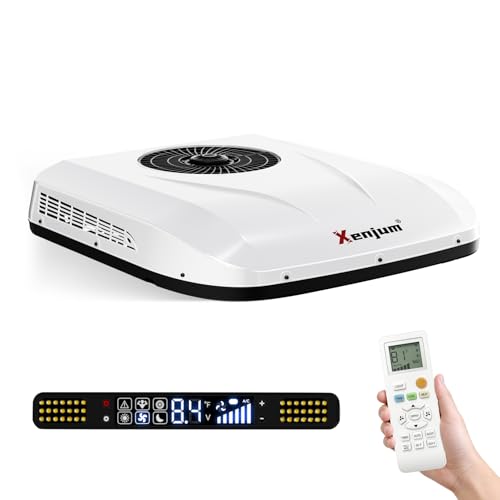
Best for energy efficiency and quick cooling on off-grid trips. The Xenjum unit delivers 11,000 BTU cooling plus 4,500 BTU heating with a soft-start to protect battery health and reduce surge. It emphasizes quiet operation at about 35dB and claims higher energy efficiency through an inverter scroll compressor design, with compatibility for solar panels to maximize off-grid freedom. A 600Ah battery can sustain up to 10 hours of cooling, depending on conditions.
Caveat: Off-grid operation requires appropriate battery capacity and possible solar support; installation quality affects performance.
Best for: Campers who want strong cooling and reliable heat while minimizing energy use.
Portable Tent AC – 5,100 BTU / 4-in-1 Camping AC

Best for tents, small campers, or off-grid booths. This portable unit provides 5,100 BTU cooling with 4-in-1 functionality: cooling, heating, dehumidifying, and fan modes. It’s designed to operate with portable power sources or RV battery systems, making it suitable for off-grid living where space is limited and a rooftop installation isn’t feasible. The unit is geared toward outdoor use and can maintain comfort in modest-sized spaces.
Caveat: It is not recommended for standard vehicle cigarette lighter sockets, and performance depends on adequate power support from a portable power station or RV system.
Best for: Boondock tent setups, small shelters, and on-the-go cooling where rooftop units aren’t an option.
Buying Guide: Off-Grid RV Air Conditioners
Do I need heating or cooling only?
Choose cooling-only models if you don’t require heat or if you have an alternative heating source. If you need year-round comfort, select a 11,000 BTU unit with heating (4,500 BTU) for reliable all-season performance.
What battery setup works best?
Most 12V units perform best with large-capacity batteries (for example, 400–600Ah at 12V). Soft-start technology reduces startup surges, extending battery life. For off-grid use, pair with solar panels to replenish the battery during the day.
How important is noise level?
Quiet operation matters for sleep and wildlife-friendly camping. Units around 35–45dB are considered quiet for RV and tent environments. Higher-end models with upgraded compressors tend to run quieter and smoother.
Is installation complexity a concern?
Rooftop units require proper mounting and weather sealing; some buyers prefer portable or DIY-install options to avoid professional roof work. Consider warranty and fitment with your RV’s roof structure before purchasing.
What about off-grid runtime?
Runtime depends on battery size and whether the unit supports a soft-start. In general, cooling with a 600Ah battery can run for several hours. Solar input can extend the runtime by recharging the battery during the day.
How to compare efficiently?
Use a simple table of BTU, heating support, power needs, noise level, and runtime with typical battery sizes. This helps to identify the model that best aligns with your off-grid lifestyle and available power sources.
Key considerations for roof-mounted vs. portable units
Roof-mounted units deliver consistent cooling for larger spaces but require installation effort. Portable units provide flexibility for tents and smaller setups but may have lower overall cooling capacity. Your space, roof structure, and power access determine the best choice.
FAQ
Q: Are 12V RV air conditioners suitable for off-grid camping?
A: Yes, many are designed to run directly from a vehicle battery or a dedicated RV battery system, especially when paired with soft-start and energy-efficient compressors.
Q: Can these units work with solar panels?
A: Most off-grid models can be powered by solar, but you need a sufficiently sized solar array and battery bank to handle startup surges and continuous cooling or heating.
Q: Do all units provide heating?
A: No. Some models cool only. If you need heat, select a unit that lists heating BTU or a heater option.
Q: How loud are off-grid RV air conditioners?
A: Quiet models hover around 35–45dB. Noise varies with compressor type and fan design, so consider your tolerance for sound during sleep.
Q: What is the installation effort for rooftop units?
A: Rooftop installs require mounting hardware and a weather seal. Some models include installation guides, while others may require professional assistance for a leak-free setup.