
Answering the need for a stable, portable support, these shooting sticks and walking sticks help hunters, hikers, and outdoor hobbyists maintain balance and accuracy. The top picks cover ultralight trekking poles, adjustable monopods, and versatile all-terrain supports. Ideal buyers include ultralight backpackers seeking minimal weight, casual hikers needing quick height changes, and serious shooters requiring precise aiming in varied elevations.
A quick reference table of the five selected products:
| Product | Best For | Key Benefit |
|---|---|---|
| Cascade Mountain Tech Trekking Pole | Ultralight hikers | Carbon fiber, quick lock height |
| Allen Axial EZ-Stik Shooting Stick | Versatile shooting positions | Push-button extension, durable aluminum |
| Allen Monopod Shooting Stick 14.5″-34″ | Compact setups | Lightweight, adjustable height |
| CVLIFE Hunting Monopod Shooting Stick | All-terrain stability | Tiltable and rotatable base, durable |
| HUNTPAL Shooting Monopod Tripod Stick | Flexible heights and angles | 3-in-1 use, 360° swiveling |
Each product is described with suitability, strengths, and a practical limitation to help you compare quickly. The buying guide at the end offers targeted questions to refine your choice based on use case and terrain.
Cascade Mountain Tech Trekking Pole
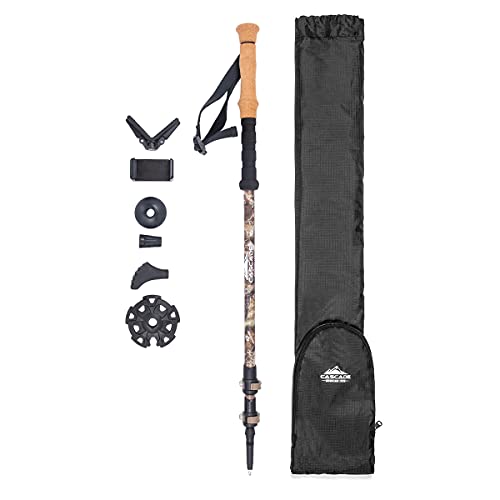
Features: Carbon fiber construction yields light weight with strong support. Weighs 8.6 oz per pole and includes quick lock extendable design for height ranging from 28.5” to 60”. Best for hikers who value ultralight gear and fast adjustments in variable terrain.
Best for: Ultralight backpackers and casual walkers who want a single high-quality pole that reduces load without sacrificing stability. This pole is chosen for its simplicity and weight efficiency.
Caution: Carbon fiber can be sensitive to sharp impacts; handle with care to avoid structural damage.
Allen Axial EZ-Stik Shooting Stick

Features: Adjustable 33”–61” height with push-button auto-slide action. Monopod aluminum design provides durability, while the cradle rest grip secures the rifle during use. Versatile for standing, kneeling, treestand, or hiking scenarios.
Best for: Hunters and shooters who need quick height changes and reliable grip in a lightweight frame. This model suits users who value rapid adjustments in the field.
Caution: Heavier models can be less ideal for ultra-light backpacking when minimizing weight is essential.
Allen Company Monopod Shooting Stick (14.5″–34″)

Features: Adjustable from 14.5” to 34” with a strong aluminum build. Cradle rest grip helps prevent rifle slip, making this a dependable tool across hunting styles. Suitable for those who need compact height and a reliable rest.
Best for: Shooters seeking a compact, lightweight option for short-range setups or travel-friendly field use. Choose this if you need a smaller footprint in your kit.
Caution: Limited maximum height compared to taller stands; evaluate your typical shooting posture before purchasing.
CVLIFE Hunting Monopod Shooting Stick

Features: Aluminum monopod with a 20.5”–66.1” height range, 22 lb load capacity, and a rotatable/baselike tripod base. Rubber V Yoke is detachable and compatible with various mounting screws for versatility in aiming or camera use.
Best for: Outdoor enthusiasts who need a long reach and adaptable base for diverse terrain. This model combines portability with a broad height range for standing, kneeling, or seated use.
Caution: Slightly heavier than ultra-compact options; ensure your pack space allows the added weight.
Trakiom Shooting Stick Rifle Monopod

Features: 25.2”–65” height with 20° tilt and 360° swivel base. Includes foldable spike or rubber cap tips, making it adaptable for mud, grass, rocks, or trails. Weighs about 2.07 lbs, supporting up to 11 pounds of gear.
Best for: Users needing a multi-terrain, adaptable shooting stick that can double as a trekking pole. Choose this when terrain varies and versatility matters.
Caution: Heavier than some ultralight sticks; taller setups may require more backpack space.
HUNTPAL Hunting Monopod Shooting Tripod Stick

Features: 360° swivel and tiltable design in a robust aluminum build. The 3-in-1 set includes a carry handle, sturdy buckle, and a durable tip, allowing quick conversion between monopod, tripod, or walking stick for varied terrains.
Best for: Shooters who need maximum flexibility in stance and shooting angles, plus easy transport between locations. This model excels in changing terrain and scenarios.
Caution: The combined functions may require familiarization to deploy quickly under pressure in the field.
Buying Guide: Key Purchase Considerations
- Usage scenario: Are you primarily hiking with a walking stick, or do you need a stable rifle rest on uneven ground? Match the product to your main use case.
- Height range: Consider your typical shooting posture and standing height. Taller ranges are beneficial for kneeling or standing poses.
- Weight and portability: Ultralight poles suit backpackers; heavier models provide steadier rests but add weight.
- Material and durability: Carbon fiber offers lightness but requires careful handling; aluminum is durable and affordable.
- Adjustability: Quick-lock or push-button mechanisms save time in the field. Ensure the mechanism is reliable in cold or wet conditions.
- Versatility: If you want a single tool for multiple jobs (hiking, shooting, camera), prioritize models with multi-use bases and swivels.
- Base stability: Look for a wide, rotatable base or tripod-style support for better stability on soft ground or slopes.
FAQ
- What is the main difference between a shooting stick and a walking stick?
– A shooting stick is designed to support aiming and stability for firearms or cameras, while a walking stick prioritizes balance and mobility during movement. Some models combine both features for versatility. - Which height range is best for standing shooting?
– For standing shooting, a height up to 60 inches or more is beneficial, depending on your torso height and stance. Lower ranges are fine for kneeling or sitting. - Is carbon fiber better than aluminum for these sticks?
– Carbon fiber offers lighter weight and stiffness, which helps reduce fatigue on long hikes, but it can be pricier and may require careful handling. Aluminum is durable and typically more economical. - Can these sticks be used for camera mounts as well?
– Some models feature detachable yokes and universal screws that allow mounting cameras or scopes. Check the product’s compatibility before use. - What should I consider about terrain.
– For mud or uneven ground, choose a model with a wide, stable base or a tripod-like design. For hard, flat surfaces, a compact, tall monopod can be sufficient. - Do these sticks require maintenance?
– Regularly check locking mechanisms and joints for play or wear. Clean and dry parts after use in moisture-prone environments to extend life.