
If you’re protecting a travel trailer roof, choose a coating designed for multiple roof types, high reflectivity, and strong waterproofing. This guide highlights five top options and explains who each product suits best. Ideal buyers include weekend travelers seeking quick fixes, full-time RV owners needing long-lasting protection, and DIY enthusiasts who want simple application with reliable results.
Summary of selected products
- Liquid Rubber RV Roof Sealant – 1 Gallon
- Liquid Rubber RV Roof Sealant – 5 Gallon
- SENVEN RV Roof Coating White – 1 Gallon
- BEEST RV Roof Coating White – 5 Gallon
- Kohree RV Roof Coating – 1 Gallon
Product comparisons
| Product | Best For | Key Benefit | Typical Coverage |
|---|---|---|---|
| Liquid Rubber RV Roof Sealant – 1 Gallon | Small to mid-sized trailers | Flexible, heat-reflective membrane | Per gallon varies by surface |
| Liquid Rubber RV Roof Sealant – 5 Gallon | Larger trailers or long-term projects | Same flexible, reflective protection with higher volume | Expanded coverage per kit |
| SENVEN RV Roof Coating White – 1 Gallon | Budget-conscious repairs | Elastomeric, multi-surface, durable | Moderate coverage per coat |
| BEEST RV Roof Coating White – 5 Gallon | Large trailers, DIYers needing fast build | High-coverage, UV stable, flexible | Up to 250 sq ft per two coats |
| Kohree RV Roof Coating – 1 Gallon | EPDM and TPO roofs | 100% silicone, no primer needed | 50 sq ft per coat |
Liquid Rubber RV Roof Sealant – 1 Gallon

Best for small to mid-sized travel trailers that need a flexible, heat-reflective sealant. This product forms a flexible waterproof membrane suitable for EPDM, TPO, fiberglass, and aluminum roofs. It also works with skylights and vent covers as part of a complete RV roof sealing system. The coating pairs with Liquid Rubber EPDM Primer for enhanced adhesion on EPDM and TPO surfaces. A key limitation is the need to recoat periodically to maintain optimum protection in extreme weather.
Liquid Rubber RV Roof Sealant – 5 Gallon

Best for larger travel trailers or projects where extended coverage is beneficial. This 5-gallon option provides the same flexible, sun-reflective membrane to reduce interior heat and extend roof life. The multi-surface compatibility remains the same, including EPDM, TPO, fiberglass, and aluminum. Consider this option when planning a full roof coating overhaul on a bigger RV to minimize the number of refills or reapplications.
SENVEN RV Roof Coating White – 1 Gallon

Best for budget-conscious repairs on a variety of roof types. SENVEN offers a heat-reflective, waterproof elastomeric coating designed to protect against leaks and temperature extremes. It works with EPDM, TPO, fiberglass, and aluminum roofs and is compatible with nearby components like vents and skylights. A caveat is that coverage can vary based on surface texture and absorption, so plan accordingly for your roof size.
BEEST RV Roof Coating White – 5 Gallon

Best for large trailers needing high-coverage, durable protection. BEEST’s 5-gallon kit covers up to 250 sq ft with two coats, offering robust solar reflectivity and waterproofing. It’s suitable for trailers, campers, and other flat or low-sloped roofs. Use BEEST in conjunction with a primer for EPDM surfaces for best adhesion. A potential limitation is longer curing times in cooler environments.
Kohree RV Roof Coating – 1 Gallon
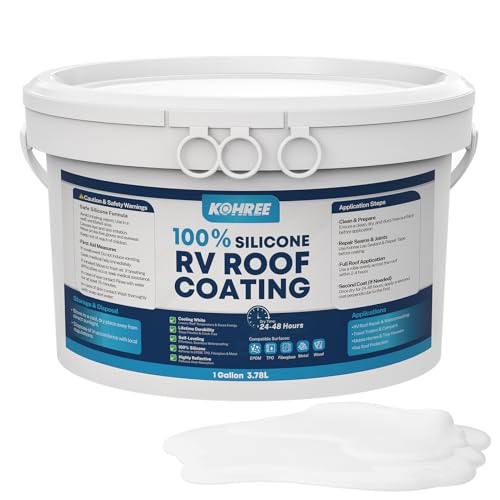
Best for EPDM and TPO roofs requiring a no-primer silicone solution. Kohree’s 100% silicone formula provides elasticity and waterproof sealing with heat-reflective properties. It’s easy to apply and suitable for roofs with a variety of materials, including metal and wood near the RV. One coat covers about 50 sq ft, so plan multiple coats for larger surfaces. Consider this option if you prefer a primer-free silicone sealant with strong weather resistance.
Buying Guide: Key Considerations
- Roof material compatibility: Confirm EPDM, TPO, fiberglass, aluminum, or metal compatibility to ensure optimal adhesion.
- Reflectivity and heat management: Choose solar-reflective coatings to reduce interior temperatures and AC load.
- Coverage and application: Estimate total roof area and factor in coats required; some products require multiple coats for full coverage.
- Environment and safety: Water-based formulas are generally easier for DIY use and safer around pets and humans.
- Primer requirements: Some products need a dedicated primer on certain substrates; others claim no primer needed.
- Curing time and climate: Warmer, drier conditions speed curing; cooler or humid climates may slow it down.
- Longevity and maintenance: Consider long-term durability and how easy it is to recoat in the future.
FAQ
- What roof coatings are best for RVs with EPDM membranes?
– Look for products specifically labeled for EPDM and designed to bond well with rubber membranes. - Do these coatings reflect heat to lower interior temperatures?
– Yes, many coatings include heat-reflective or solar-reflective properties to reduce heat gain. - Is primer required for all roof coatings?
– Not all require primer; some surfaces may need a primer for best adhesion, especially EPDM or TPO. - Can I apply roof coating over existing coatings?
– In most cases, you should prepare the surface (clean, dry) and follow product-specific guidelines; some coatings require a primer or specific adhesion steps. - How many coats are typically needed?
– Many products recommend two coats for full coverage; always follow the manufacturer’s guidelines for your roof size and material. - Is a roof coating safe for indoor use?
– Water-based formulations are generally safer for indoor use and occupant exposure, but always follow product safety data sheets.