
The best vintage military sleeping bag picks offer rugged construction, reliable insulation, and historical appeal. This guide highlights five top options, suitable for cold-weather campers, survivalists, and gear collectors. Each product is evaluated for who it suits, why it’s a strong choice, and any limitations to consider.
Summary of top picks:
| Product | Best For | Why It Stands Out | Limitations |
|---|---|---|---|
| Tennier Gilette Very Warm Subzero ECW Bag | Cold-weather adventurers and collectors | Original US Government design with extreme cold insulation | Heavy and bulky |
| MT Modular Sleep System – 4-Piece | Modular and versatile setups | Front-zip design and vacuum compression sack | More components to manage |
| OneTigris Bushcrafter’s Bag | Backpacking and 3-season use | Lightweight mummy style with quick-dry materials | 3-season warmth limits in extreme cold |
| USGI Gear Modular System | All-weather readiness | 4-piece system with bivy cover and durable shell | Bulkier than compact options |
| US Military ECWS Woodland 4-Piece | All-season reliability | Includes patrol, intermediate, bivy, and stuff sack | Heavier package |
Tennier Gilette Very Warm Thick Old School Military ECW Subzero Bag

Best for extreme cold environments, this US military issue Subzero bag is long and wide at the top to accommodate bulk layers. It weighs about 8 pounds and measures 84 inches long with a 30-inch shoulder width tapering to 14 inches. It is OD green and designed for harsh weather conditions. Best for cold-weather collectors or campers who value authentic vintage design and heavy insulation. Caution: bulk and weight may reduce packability for lightweight trips.
MT Modular Sleep System – 4-Piece Set
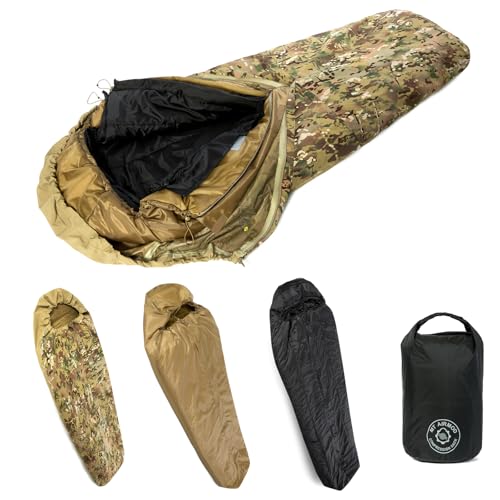
Best for modular, field-ready setups, this system includes Patrol Bag, Intermediate Cold Weather Bag, Waterproof Bivy Cover, and a vacuum compression sack. The centerline front zipper improves entry and ventilation, making it better for quick rests or rapid egress in tactical scenarios. The vacuum sack offers significant space reduction and waterproof protection. Limitation: managing multiple components can be less convenient for ultralight travelers.
OneTigris Bushcrafter’s Sleeping Bag

Choose this if you want a 3-season mummy-style bag designed for camping, hiking, and backpacking. It features a water-repellent 300T pongee outer shell, breathable lining, and quick-dry polycotton filling. Zippers are designed to minimize snagging, and the hood offers extra protection against the cold. Best for hikers and campers who prioritize compactness and fast drying. Caution: warmth is optimized for 46.4–59°F (8–15°C); colder nights require additional insulation.
USGI Gear Military Sleeping Bag System
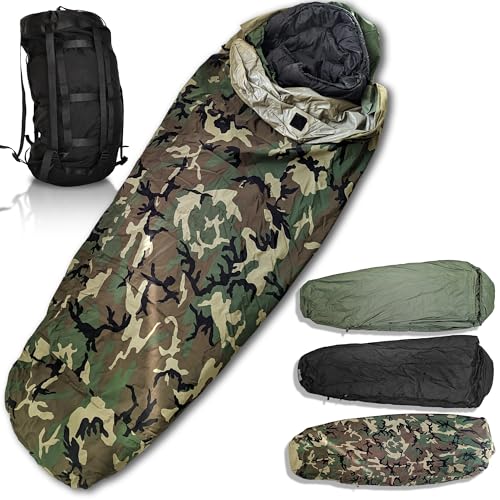
This 4-piece system includes Patrol and Intermediate Cold Weather bags plus a waterproof bivy cover and compression stuff sack. It emphasizes versatility from 50°F down to -50°F. The outer fabric uses 210T nylon ripstop with DWR for durability and water repellency. Best for all-weather readiness, but the full kit can be bulky for compact travel. Caution: weight and setup complexity increase with full deployment.
Military Modular System With Center Zipper

Best for flexible field use, this MT system uses a center zipper for faster entry, and includes a patrol bag, an intermediate bag, and a waterproof bivy cover. Built with a durable ripstop shell and a soft inner lining, it is designed for long-term outdoor use. It is best for users who need quick access and modular configuration, but like other MSS setups, it may require more storage space than single-bag options.
MT Army Military Modular Sleeping Bags System

Best for all-season use, this MT system uses multi-layer design with a bivy cover. It emphasizes high-grade filling and a temperature range that supports variable conditions. It is suitable for multi-day expeditions or bivouacs where weather can shift. A limitation is that some setups may feel bulky for shorter trips or minimalists.
US Military Modular System Green Patrol Sleeping Bag
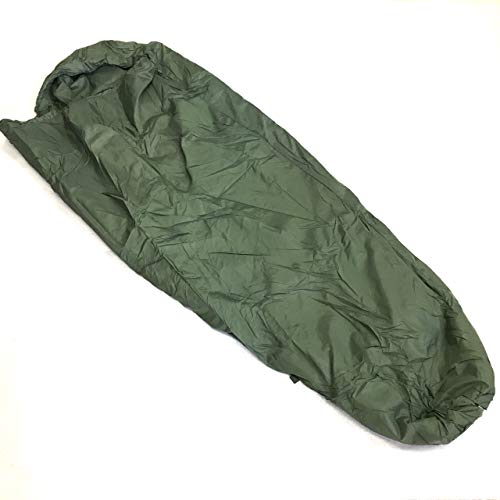
Best for patrol and reconnaissance use, this module is 92 inches long and 37 inches wide at the widest point. It’s designed for rugged field use and integrates with other modular pieces. Suitable for collectors due to its vintage military styling, but it may be less compact than modern ultralight bags.
Amazon US Military Issue ECWS Woodland Modular System

Best for four-season reliability, this system includes Patrol, Intermediate, Bivy, and Stuff Sack. It’s designed for temperatures from 50°F down to -50°F with proper clothing. This makes it a strong choice for severe weather environments and collectors seeking authentic surplus gear. Limitation: overall weight and bulk may be significant for backpackers.
Buying Guide: Key Purchase Considerations
- Intended use: Are you collecting, camping, or prepping? Modular systems excel for versatility; single bags may suit ultralight trips.
- Temperature rating: Vintage and surplus bags vary in warmth. Look for real-world comfort ranges and layering compatibility.
- Weight and bulk: Heavier, multi-piece kits provide robustness but reduce packability. Consider your transport method and space.
- Shell and lining materials: Ripstop nylon, DWR coatings, and breathable linings affect durability and moisture resistance.
- Closure design: Center zippers can offer faster entry; traditional side zippers may be slower but reliable.
- Care and maintenance: Vintage gear may require gentle cleaning and proper drying to preserve insulation and fabric.
- Accessory inclusion: Bivy covers, stuff sacks, and compression systems impact overall value and usefulness.
FAQ
- What makes a vintage military sleeping bag a good buy?
– Durability, insulation quality, and historical design. These bags are built to last and often use high-grade materials used in the field. - Are modular systems easier to use in the field?
– Yes, center-zip and modular components can provide faster access and flexible configurations for varying conditions. - Can I use these bags for everyday camping?
– Many are suitable, but some are bulkier or warmer than contemporary bags. Check temperature ranges and packing needs. - How should I care for vintage sleeping bags?
– Follow fabric care guidelines, avoid compression long-term, and air-dry thoroughly after cleaning to preserve insulation. - Do these bags come with all parts?
– Some sets include bivies, sacks, and multiple bags; verify included components before purchase to ensure you have everything you need.